
Exploring Trophic Hotspots at IAGLR-SCAS
Researchers from the Centre for Ecosystem Management (CEM) at the University of Guelph recently led discussions on an emerging ecological concept at the annual meeting of the International Association for Great Lakes Research (IAGLR) and Southern Canadian Aquatic Sciences (SCAS) in Winnipeg.
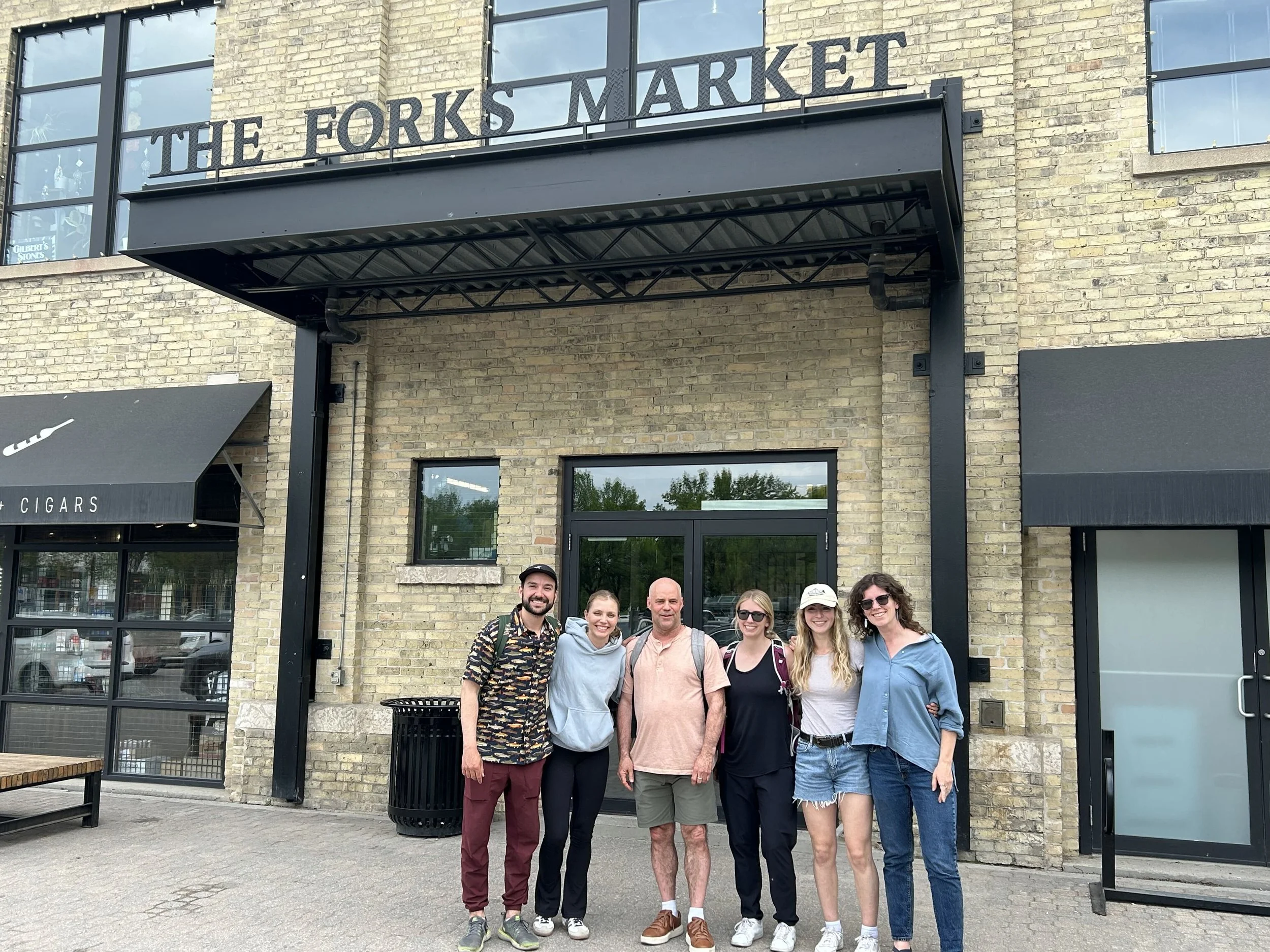
Above: CEM researchers from left to right: Tim Fernandes, Charlotte Ward, Kevin McCann, Carling Bieg, Erica Plivelic and Rachael Kieghan.
CEM researchers Tim Fernandes, Charlotte Ward, Rachael Keighan, and Kevin McCann organized and chaired a special session focused on trophic hotspots—areas where concentrated resources drive increased interactions among organisms across food webs. The session brought together researchers from across Canada and the United States, including collaborators Dr. Nathan Furey (University of New Hampshire) and Dr. Michael Rennie (Lakehead University), to explore how these ecological hotspots shape ecosystem processes.
Just as biodiversity hotspots serve as pillars supporting global diversity, ecosystems are also supported by hotspots of energy and nutrient flow. These trophic hotspots emerge when spatially or temporally patchy resources bring organisms from different levels of the food web together. This convergence can amplify the strength and number of predator–prey interactions, creating important centres of ecological activity.
While the concept of trophic hotspots was first identified in marine ecosystems, researchers now recognize that these concentrated areas of biological activity are a defining feature of many natural systems. From seasonal resource pulses to localized areas of high productivity, trophic hotspots can influence how energy moves through ecosystems and how food webs respond to environmental change.
The CEM-led session provided an opportunity for researchers studying diverse aquatic systems to share insights into where and when trophic interactions become intensified, advancing understanding of the mechanisms that shape ecosystem function and resilience.