
Nature's Portfolio: How Diversity Buffers Ecosystems Against Change
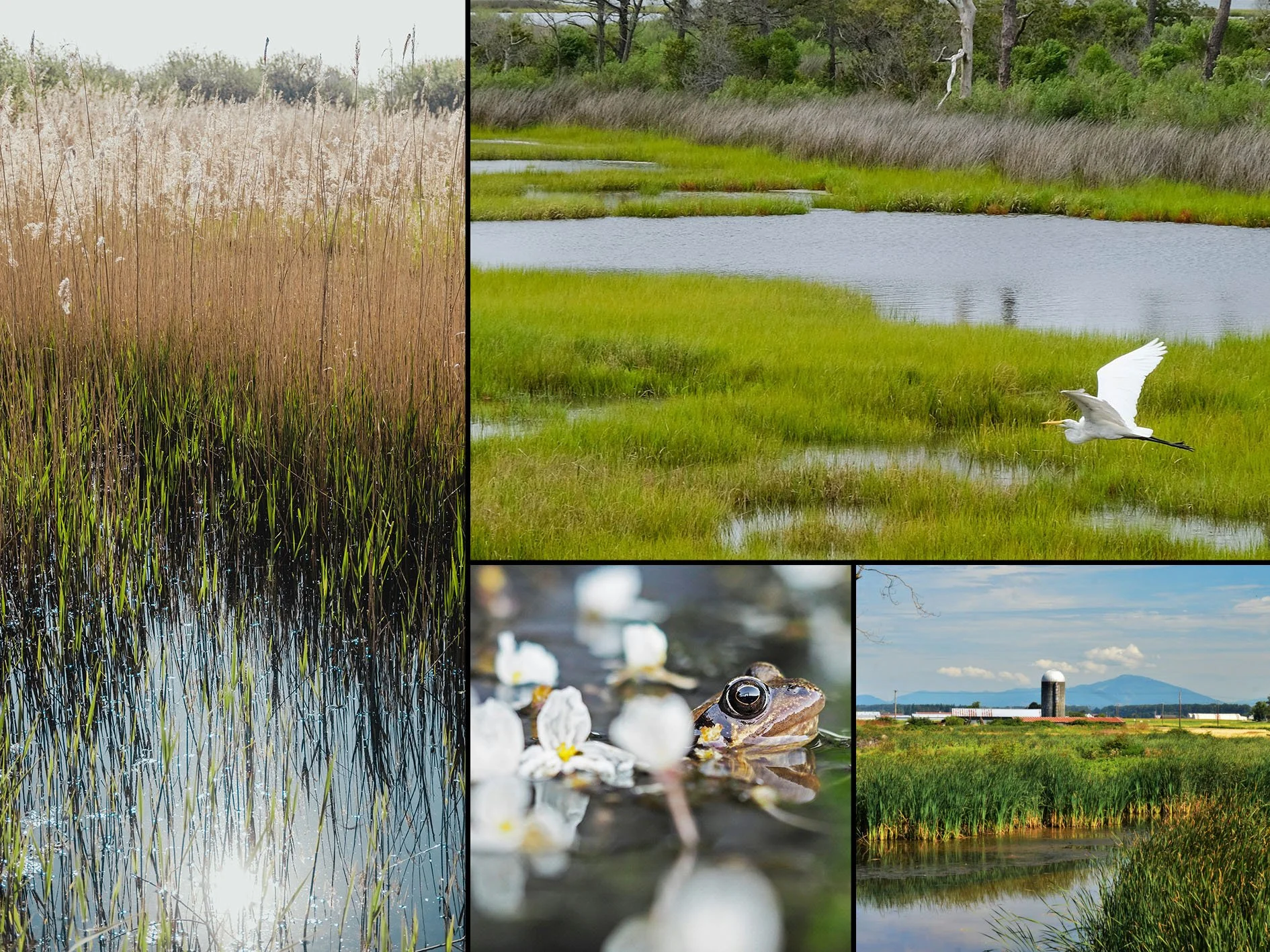
Hale, K.R., Fernandes, T.J., O'Connor, R.F., Ward, C.A., Cazelles, K., Bernhardt, J.R., Chu, C., Giacomini, H.C., Koeberle, A., Koops, M.A., Ludsin, S.A., Muir, A.M., Stewart, T., Tucker, C., Tunney, T.D. and McCann, K.S. (2026) in Front Ecol Environ e70057.

Above: Lead author and CEM postdoctoral fellow, Dr. Kayla Hale
As climate change, habitat loss, invasive species, and overexploitation continue to reshape ecosystems worldwide, a central challenge for scientists and natural resource managers is understanding what makes ecosystems resilient—and how that resilience can be protected. In a new synthesis paper recently published in Frontiers in Ecology & the Environment and featured on phys.org, researchers from the CEM (including our own Drs. Hale, Fernandes, Bernhardt, Ward and McCann) - as well as scientists from the Department of Fisheries and Oceans, Cornell University, Great Lakes Fishery Commission, Ontario Ministry of Natural Resources and Forestry, and inSileco Inc. - examine the ecological structures and processes that help ecosystems withstand disturbances while continuing to provide the benefits that people and wildlife depend on.
Drawing on examples from the Great Lakes basin, the authors highlight the importance of what ecologists call "portfolio effects": the stabilizing influence that arises when ecosystems contain a diversity of species, habitats, and ecological interactions (Figure 1). Much like a diversified financial portfolio reduces risk, ecological diversity can buffer ecosystems against environmental change and help maintain the production of natural resources over time.
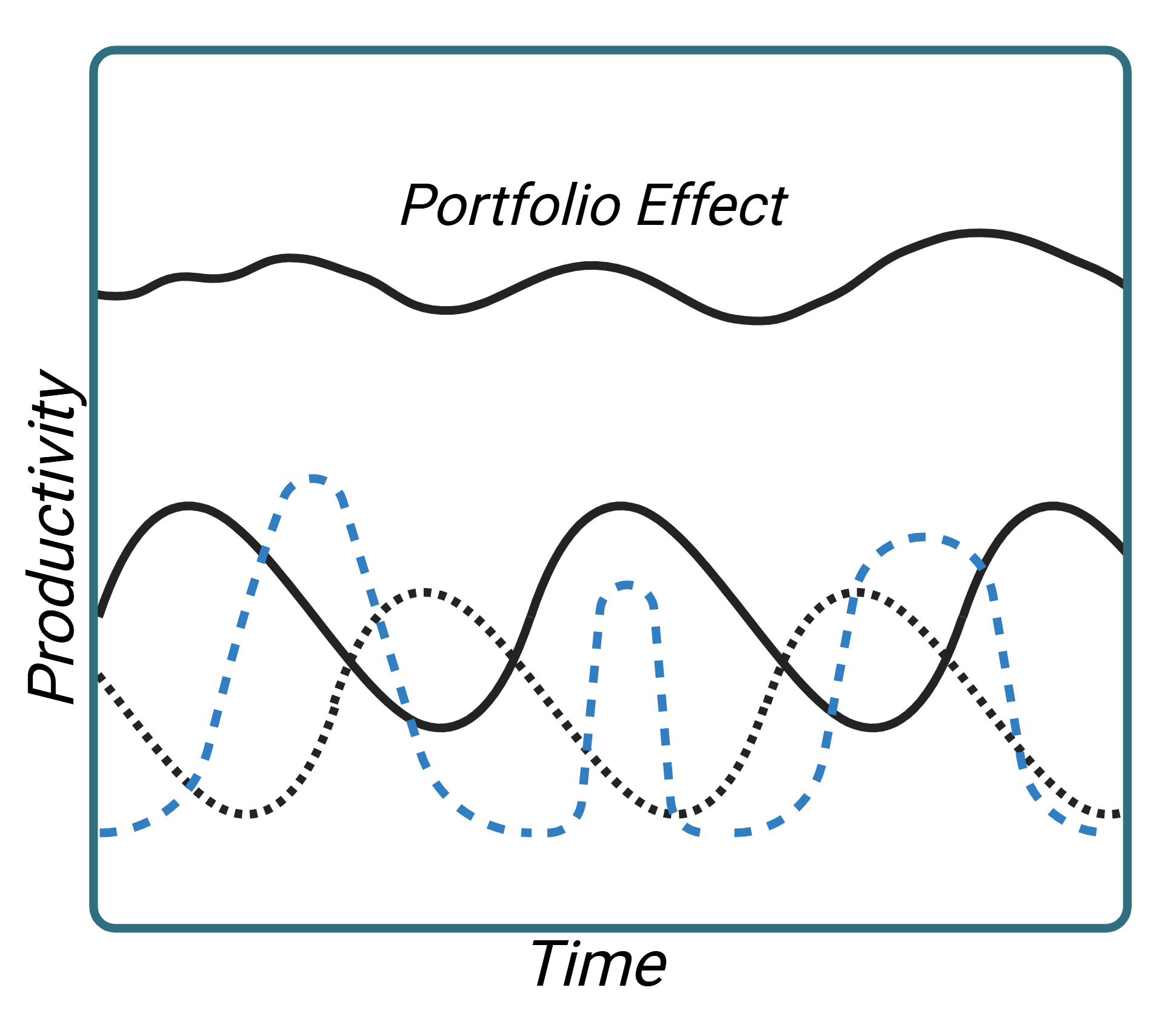
Figure 1: Productivity over time, where diversity across species, habitats, and ecological functions results in a stabilizing “portfolio effect” that promotes resilience.
Human activities have increasingly eroded both portfolio effects and the habitat diversity that supports them, leaving ecosystems more vulnerable to future disturbances. The authors argue that building resilience requires moving beyond single-species management approaches and instead focusing on maintaining the environmental and ecological diversity that stabilizes entire ecosystems. Their findings suggest that restoring habitat heterogeneity through coordinated local and landscape-scale projects and incorporating ecosystem-wide measures of resilience into management decisions could help sustain biodiversity, ecosystem function, and the services that healthy ecosystems provide in an increasingly uncertain future.
At its core, this work reframes resilience as a property that emerges from ecological diversity operating across multiple scales; from individuals and populations to food webs and landscapes. The authors conclude that conserving and restoring this diversity of habitats, species, and interactions may be one of the most effective strategies available for helping ecosystems adapt to ongoing global change.
*This work was supported by the Great Lakes Fishery Commission and the Directorate for Biological Sciences (National Science Foundation)
Hale, K.R., Fernandes, T.J., O'Connor, R.F., Ward, C.A., Cazelles, K., Bernhardt, J.R., Chu, C., Giacomini, H.C., Koeberle, A., Koops, M.A., Ludsin, S.A., Muir, A.M., Stewart, T., Tucker, C., Tunney, T.D. and McCann, K.S. (2026). Managing for resilience with ecological structure: Portfolio effects in the Laurentian Great Lakes. Front Ecol Environ e70057.