
From Data to the Lake: CEM Students Get a Firsthand Look at Fisheries Monitoring on Lake Erie
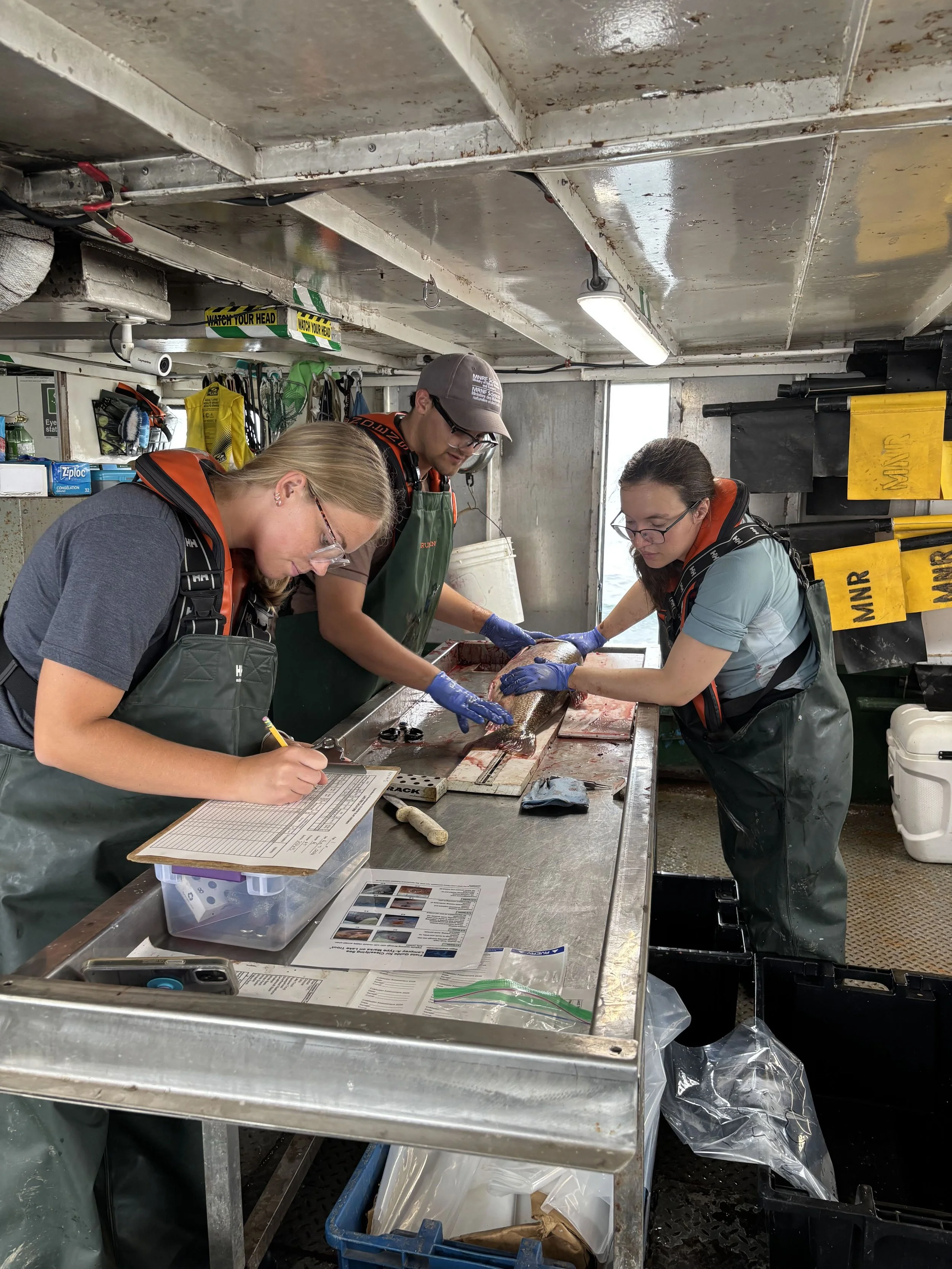
What does fisheries monitoring look like beyond the datasets and research papers?
For students Nash and Mason, the answer recently meant heading out on Lake Erie with the Lake Erie Management Unit (LEMU) crews based out of the Port Dover office to see fisheries assessment in action.
The visit gave both students—along with their supervisor and CEM Research Chair, Dr. Carling Bieg—the opportunity to take part in two different monitoring programs: the Long Point Bay Small Fish Assessment and the Coldwater Fish Assessment Program.
Nash and Mason joined the Long Point Bay crew to set and retrieve fyke nets, sampling nearshore fish communities and juvenile fish. They then headed out with the Coldwater Fish Assessment crew for standardized gillnetting in the deeper, colder waters of Lake Erie, contributing to the ongoing assessment and monitoring of coldwater fish communities.
For the students, the experience offered a valuable perspective on how the data they work with in the lab and classroom are actually collected in the field.
“It was really cool to see how catch data is actually collected after using similar data all summer,” said Mason. The experience also gave him a better understanding of why different sampling programs are designed the way they are—including how the timing and location of sampling can be managed to avoid unnecessarily affecting fish populations.
Nash, who has also seen fisheries work on Lake Ontario, appreciated the opportunity to see a different approach to achieving similar management goals. “It was interesting to see how the units run their programming differently to meet the same ends,” he said.
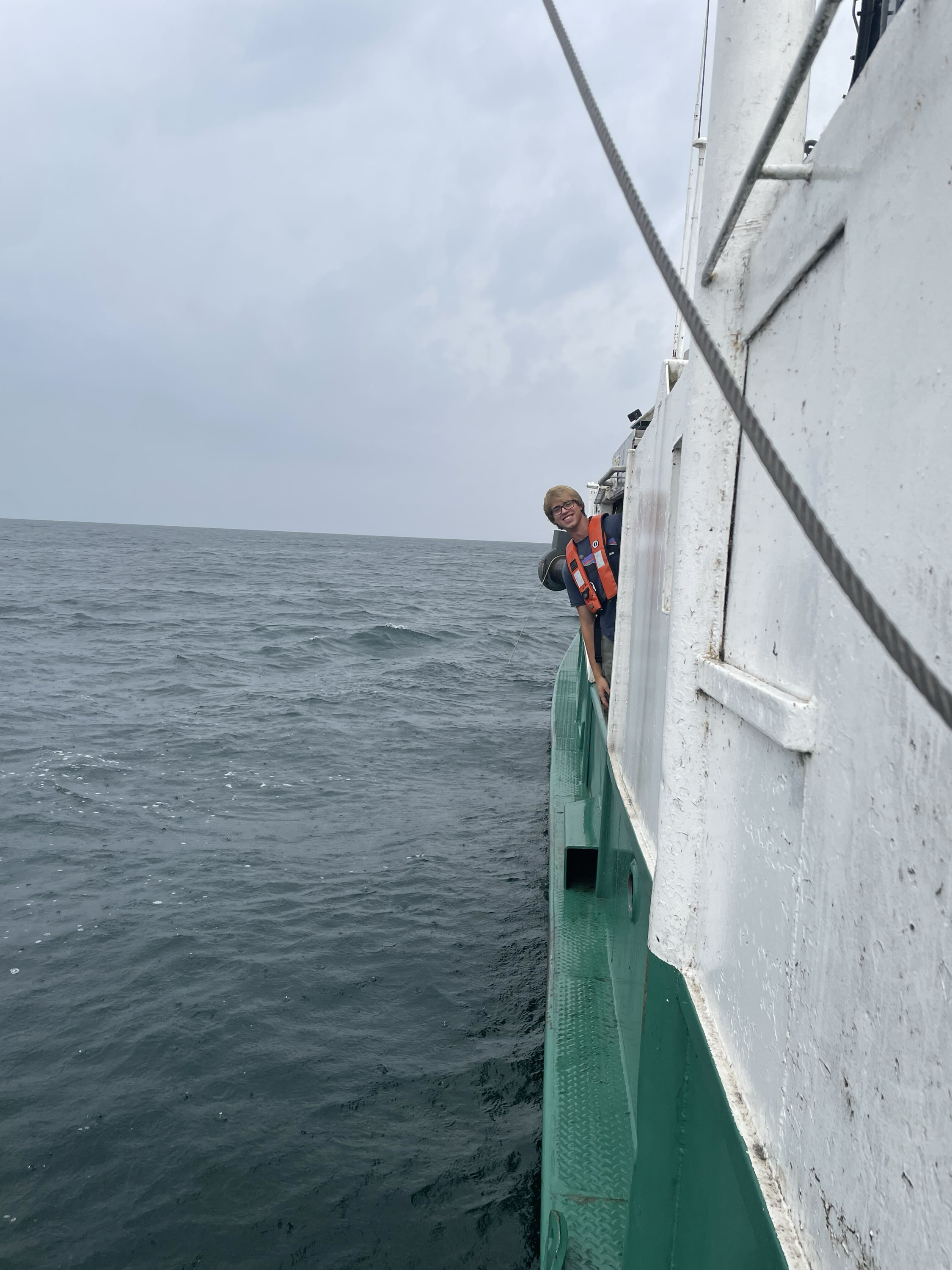

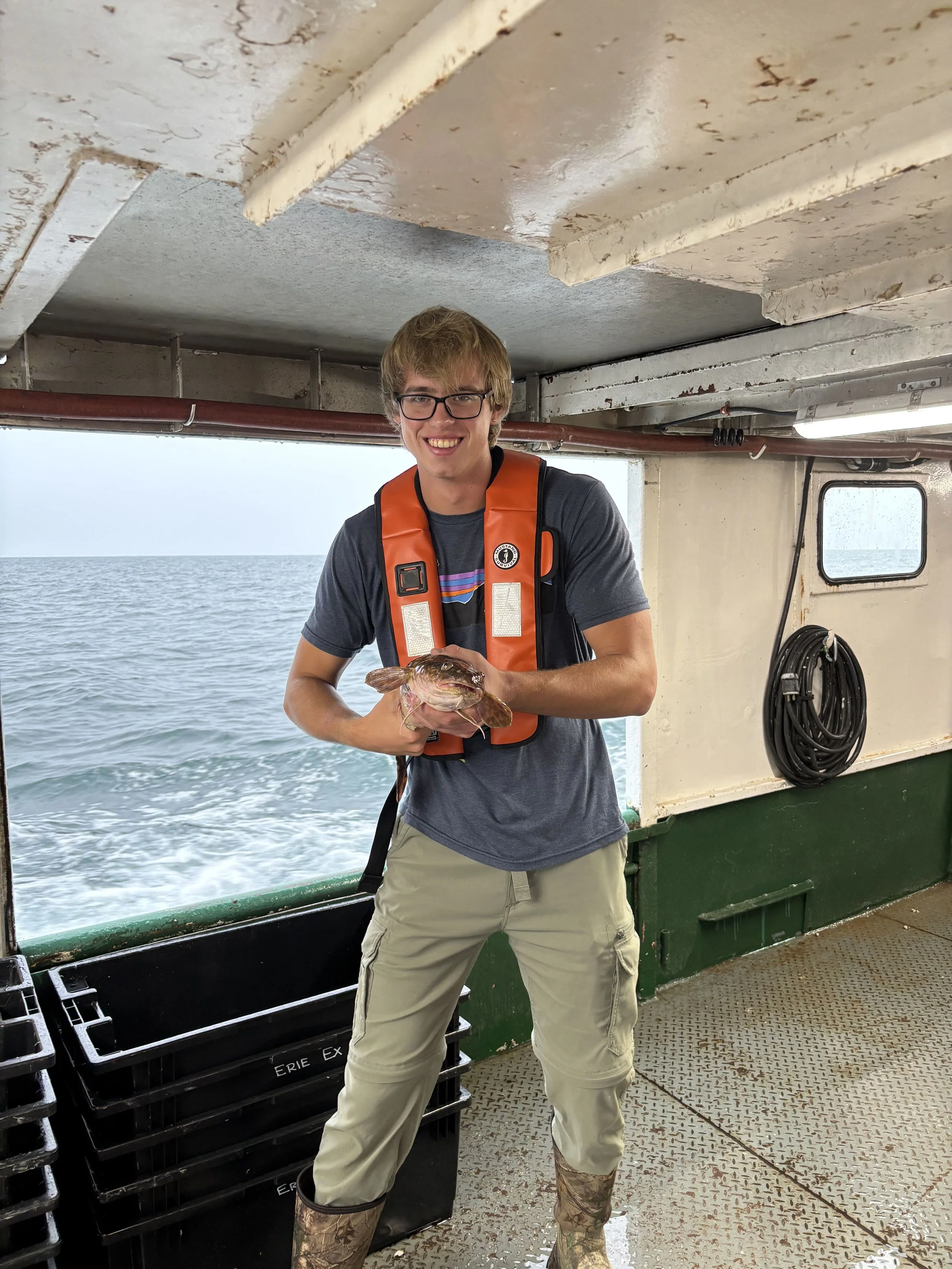
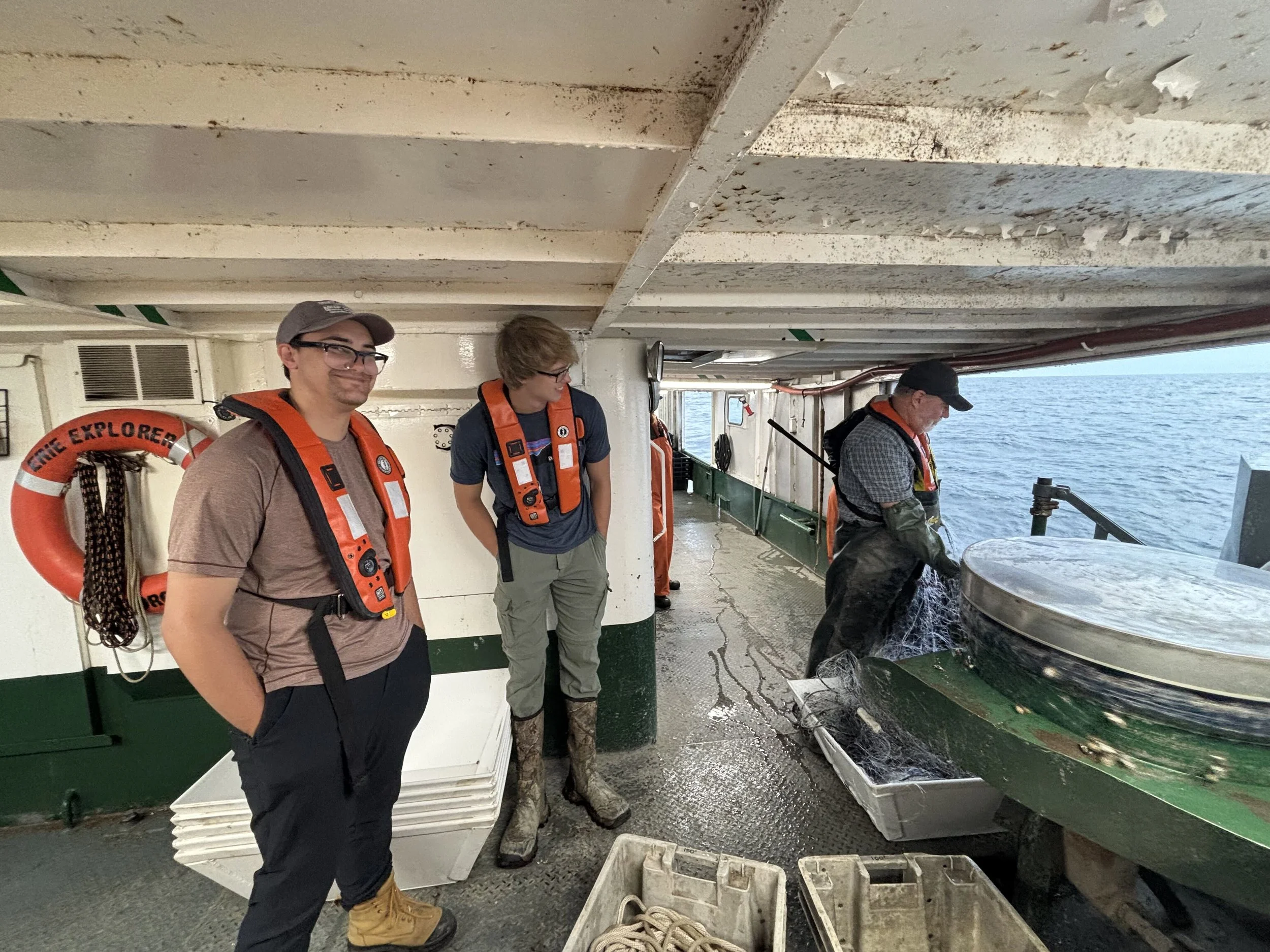
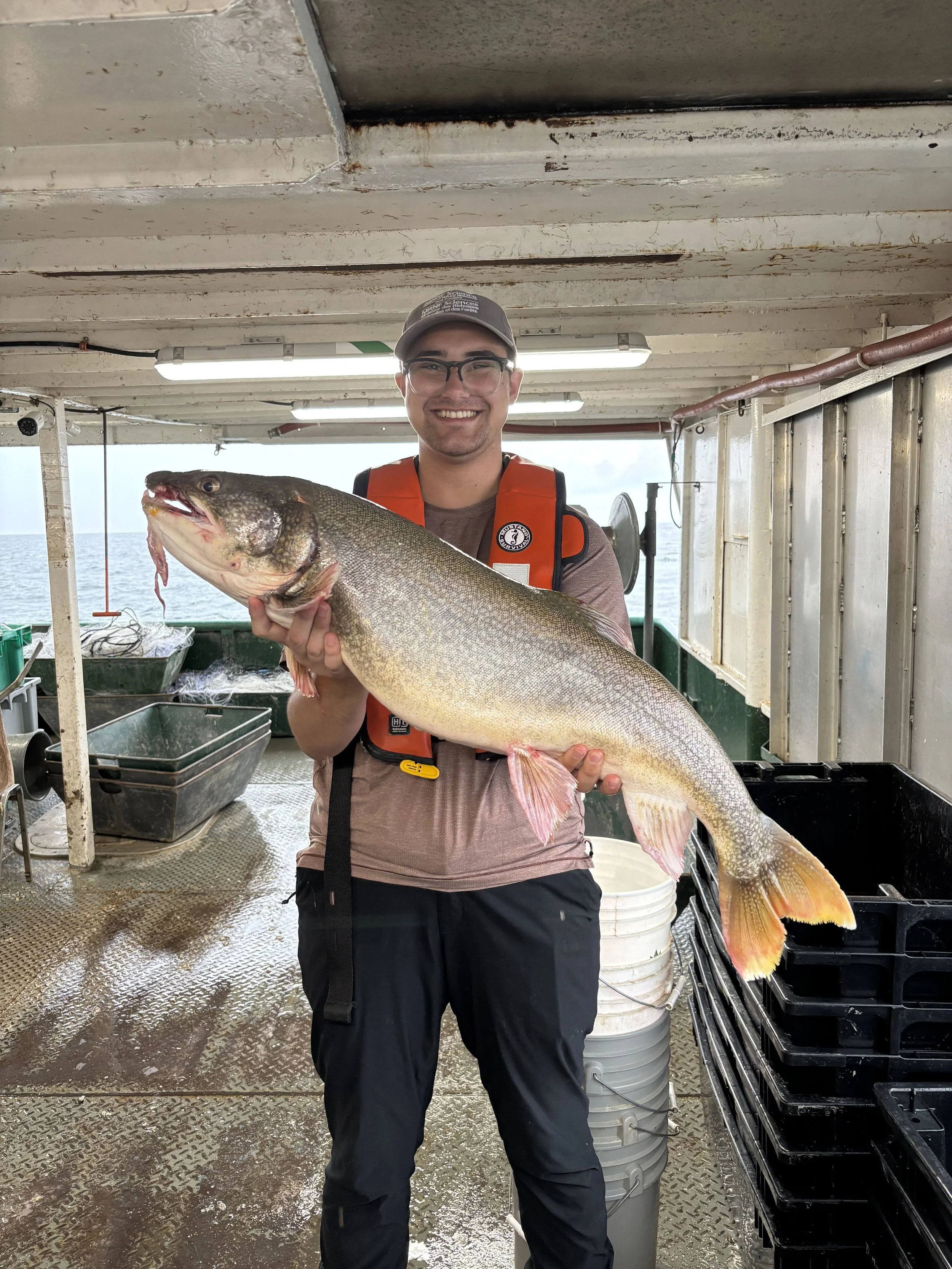
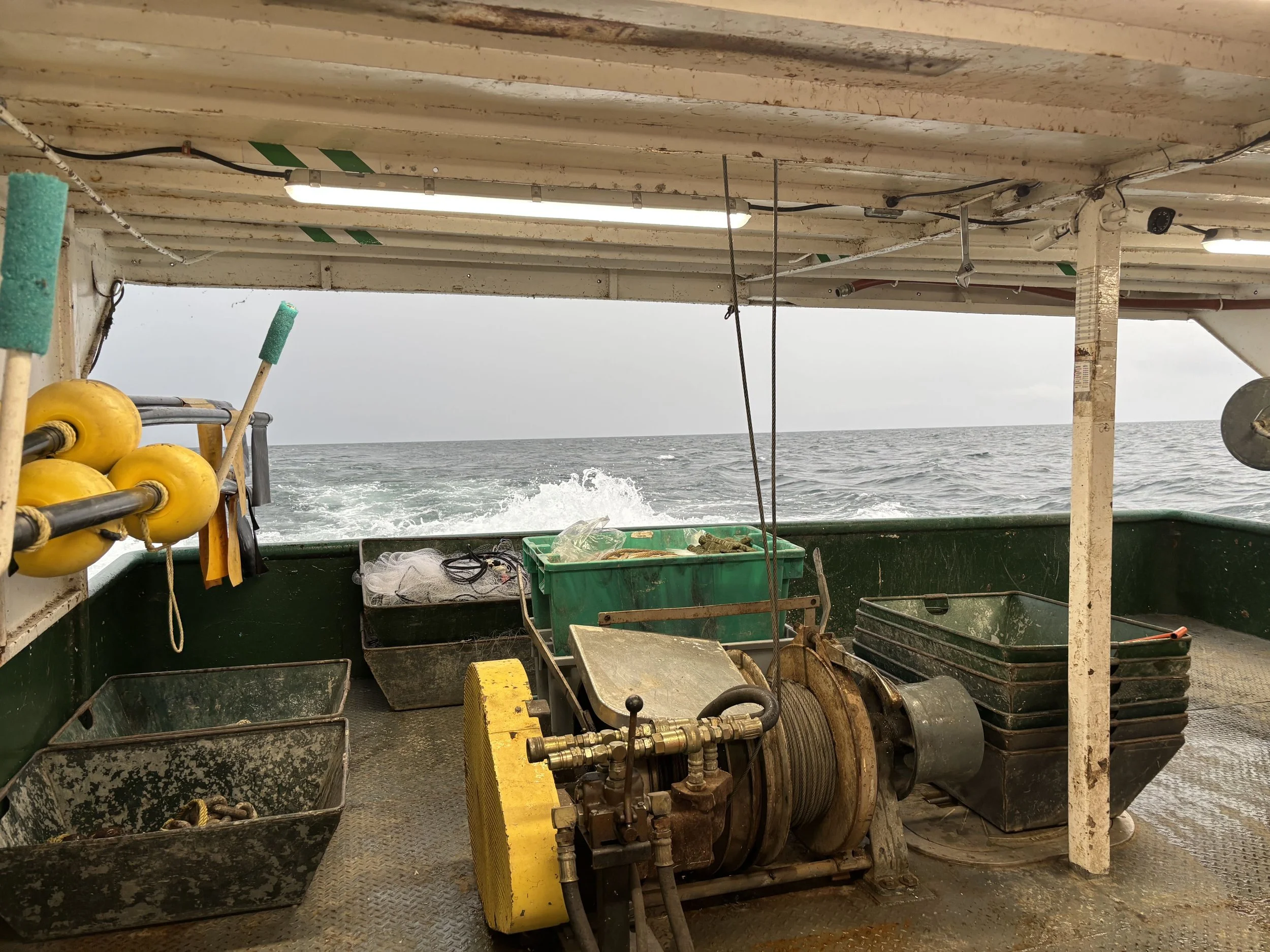
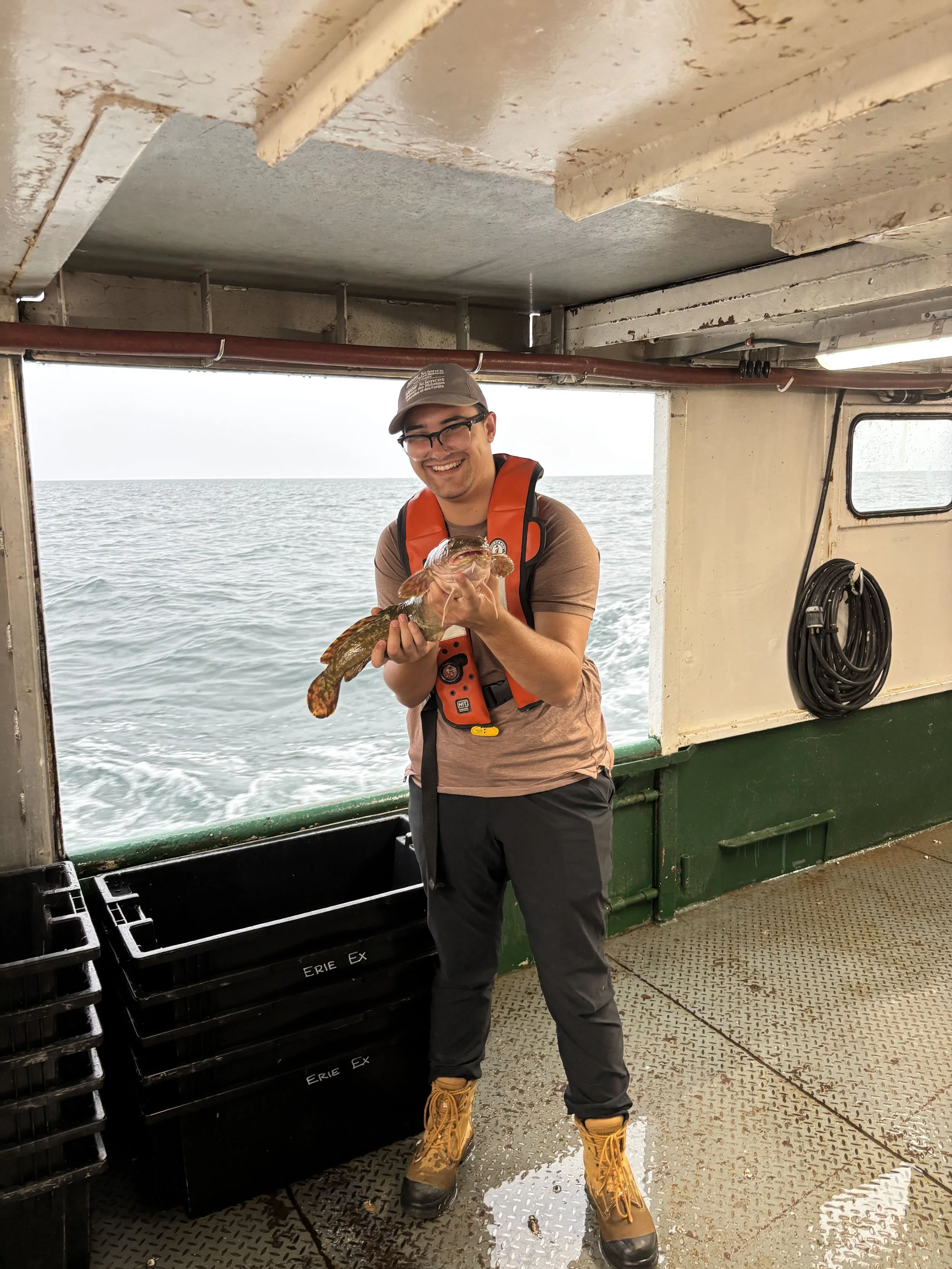

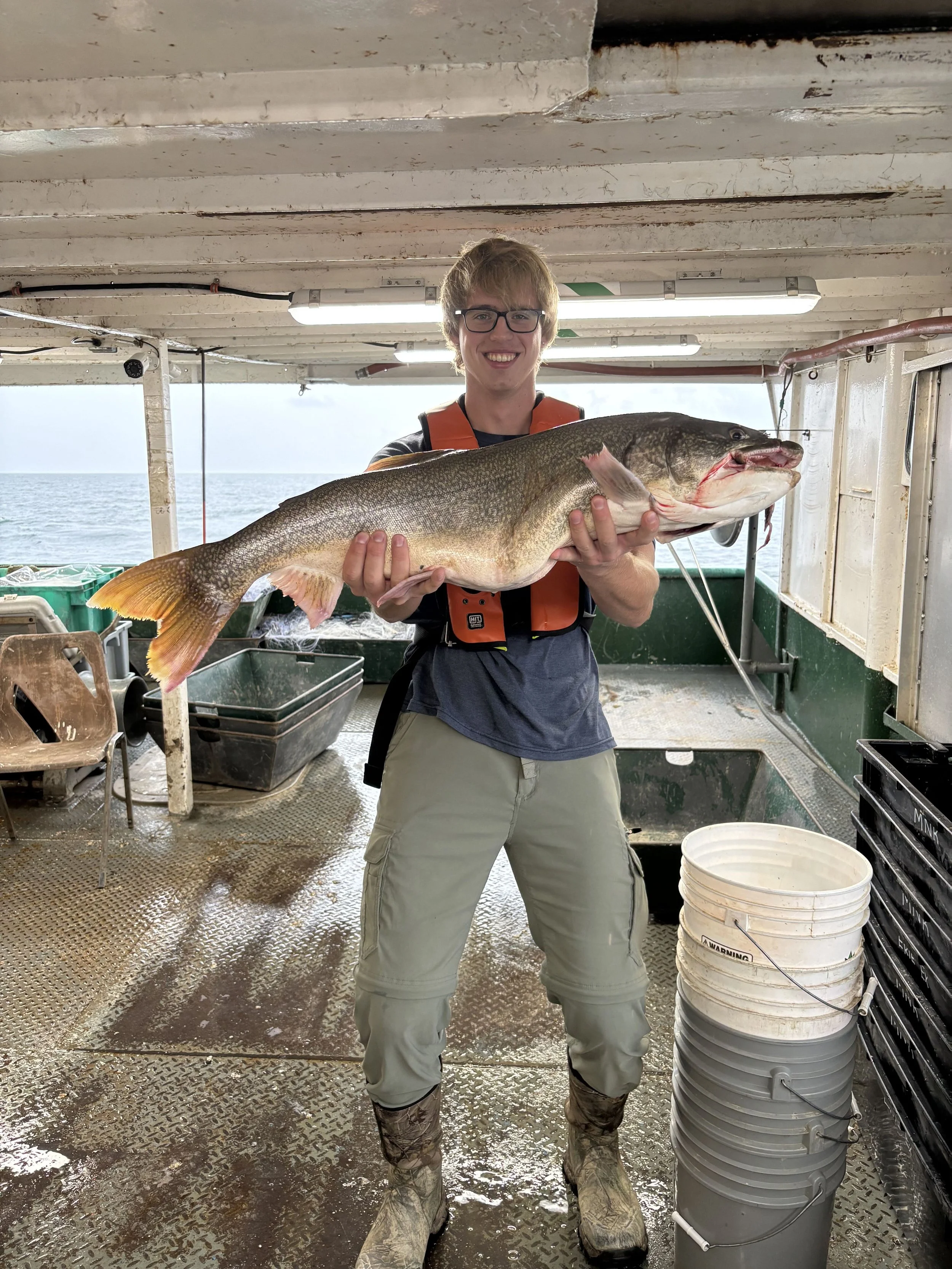
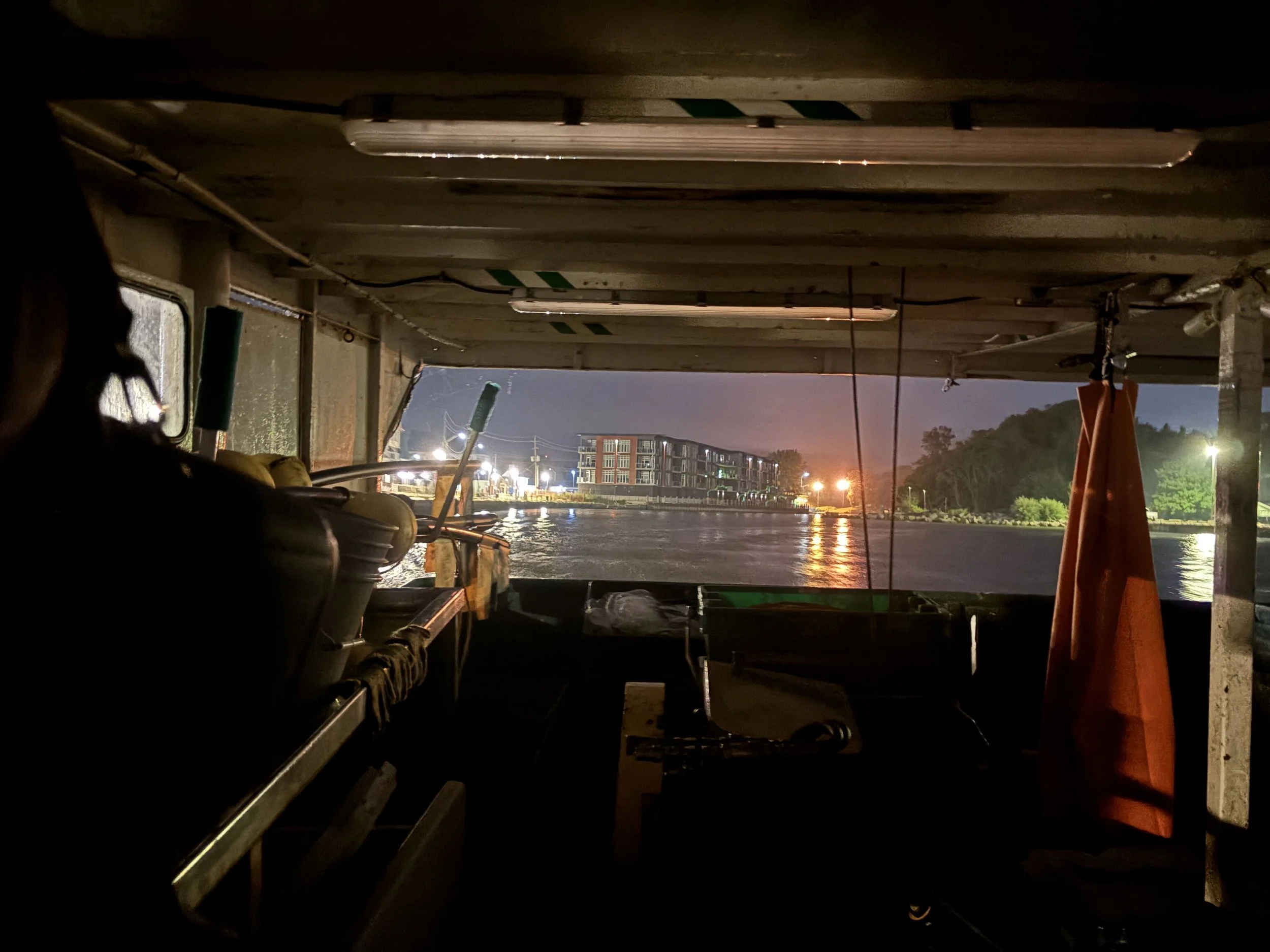
Both students also highlighted something that can be easy to overlook when much of their experience is rooted in academia: the people and careers behind fisheries management. “It’s always nice to talk to the techs about their work and see the pride they have in what they do,” said Nash. “It also gives you a glimpse into the type of careers we can get into in this line of work since we mostly see the academia side right now.” For Mason, that connection between research and practice was equally valuable: “It was really cool to learn about careers outside of academia as well.”
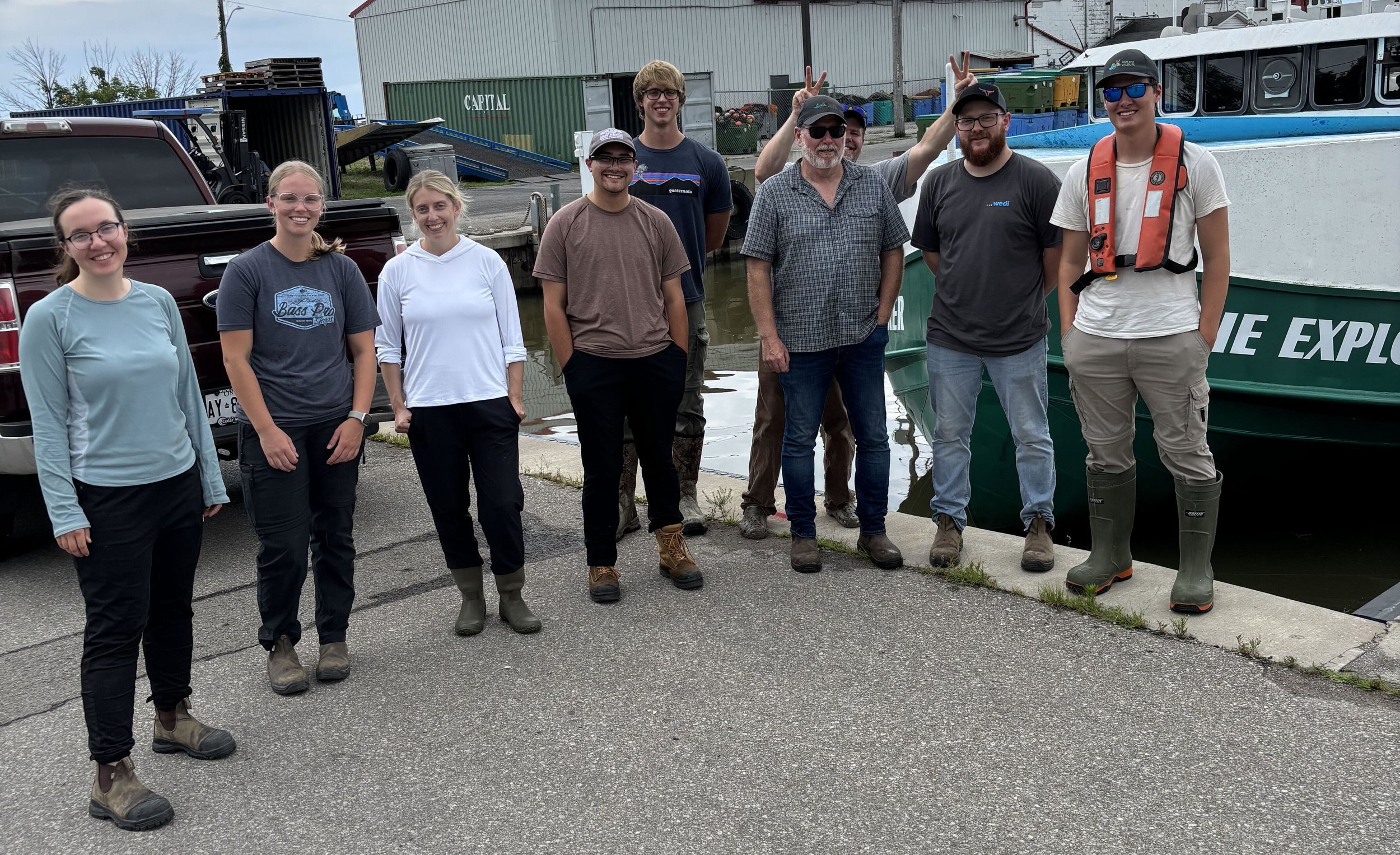
Pictured: The LEMU team, alongside Dr. Carling Bieg and her students Nash and Mason (3rd, 4th and 5th from left).
From juvenile fish in the shallow waters of Long Point Bay to coldwater communities in the depths of Lake Erie, the visit provided a firsthand look at the fieldwork that underpins fisheries science and management—and a reminder that there is much more to a dataset than the numbers on a page.
The CEM thanks the Lake Erie Management Unit crews in Port Dover for welcoming our students into the field and sharing their expertise.