
Strengthening Global Research Ties: A Visit from Japan
This month, the CEM has had the pleasure of welcoming Dr. Mito Ikemoto, an ecologist visiting from Japan, to work alongside researchers here and explore new connections between their research.
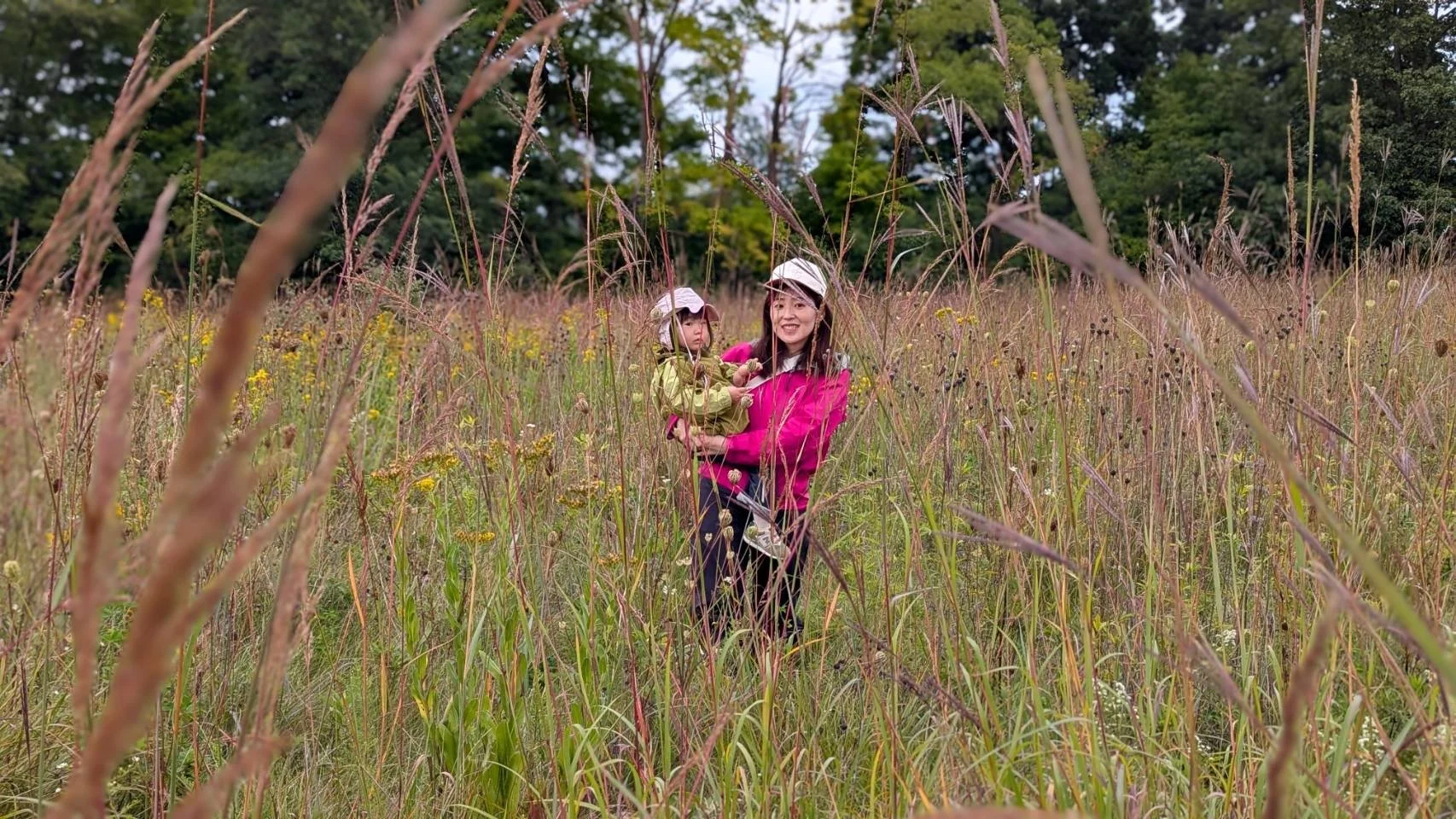
Ikemoto is a JSPS Research Fellow (PD) at Japan’s National Institute for Environmental Studies and a visiting researcher at Hirosaki University. Her research starts with something familiar—the flowers we see in our everyday surroundings—but asks some surprisingly complex questions about what happens around them.
As an empirical community ecologist, Ikemoto studies the relationships between flowers and the many organisms they attract. Flowers provide food for pollinators, but they can also draw in herbivores, predators, and parasitoids. In other words, a flower can be much more than a destination for bees and butterflies: it can become a small hub of ecological activity, linking together many different species.
Her recent work looks at how these pollination networks connect with broader food webs, and how changes in the availability of floral resources across seasons and landscapes can influence those connections.
During her visit to the CEM, Ikemoto has been bringing this perspective into conversation with our Director, Dr. Kevin McCann, whose theoretical work examines how spatial variation in resources affects food-web stability. The two researchers are exploring whether ideas about floral resources and pollination can help shed new light on the dynamics of local food webs. Their interests also overlap with Kevin’s emerging work on “trophic hotspots”—places where concentrated resources can have effects that ripple through an ecological community.
For Ikemoto, the visit has provided an opportunity to bring her empirical work from Japan into conversation with theoretical research at the CEM. For the CEM, it is another example of how international connections can spark new collaborations and perspectives that cross both disciplinary and geographic boundaries.
Further information regarding Dr. Ikemoto’s research can be found here.