
A Fishery in Flux: Uncovering the Ecological Changes Behind Lake Erie’s Yellow Perch Decline
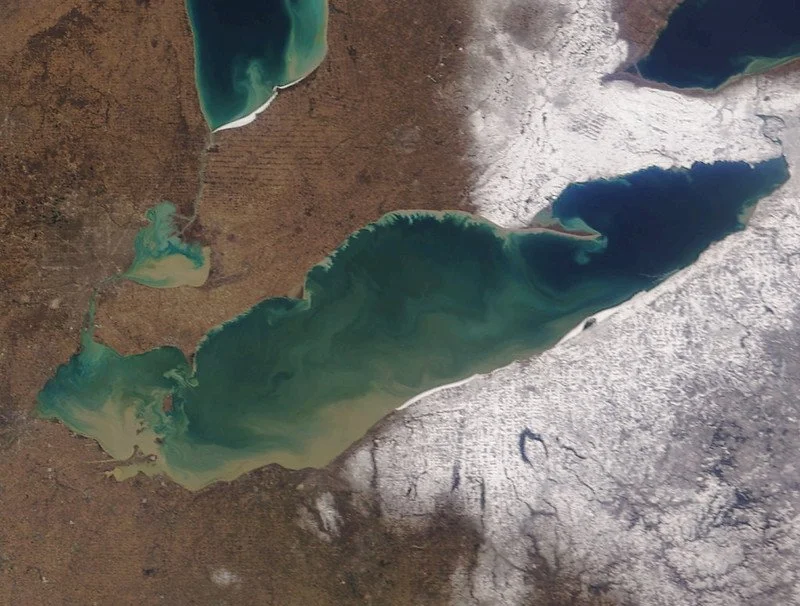
Above: A MODIS satellite image of Lake Erie on April 4, 2005. Credit: NOAA CoastWatch.
For decades, yellow perch have been an important part of Lake Erie’s ecosystem, supporting both commercial and recreational fisheries. But in recent years, yellow perch productivity in the lake’s central basin has declined, raising questions about what is driving these changes and how fisheries managers can respond. Recent CBC coverage highlighted ongoing concerns about the status of yellow perch populations and the need to better understand the environmental pressures shaping this iconic Great Lakes fishery.
At the University of Guelph’s Centre for Ecosystem Management (CEM), graduate student Mariana Blanco is investigating one possible piece of this puzzle through research supported by an NSERC Alliance grant focused on understanding changing Great Lakes food webs. Working with collaborators like Dr. Aaron Fisk, whose research was highlighted in the CBC story, this project is examining how changing environmental conditions — particularly low-oxygen events known as hypoxia — may influence what yellow perch eat and where they are able to feed.
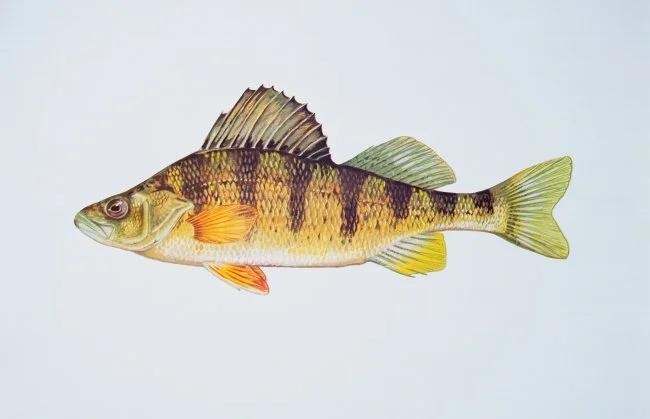
Above: Yellow perch (Perca flavescens) are an important commercial and recreational fish species in Lake Erie. Credit: Raver, Duane (public domain, https://www.fws.gov/media/yellow-perch-5).
In the central basin of Lake Erie, hypoxia can reduce the amount of suitable habitat available near the lake bottom, where yellow perch traditionally feed on energy-rich benthic invertebrates. When fish are forced away from these areas, they may rely on different, potentially less nutritious food sources. Blanco’s research uses environmental DNA (eDNA) metabarcoding of yellow perch stomach contents to provide a higher-resolution picture of their diets before and after hypoxic conditions develop. By revealing how feeding relationships shift under changing environmental conditions, this work will help reduce uncertainty in Lake Erie’s food web and improve future ecosystem models.
For fisheries managers, understanding why a species is declining is just as important as tracking the decline itself. A better understanding of how habitat conditions, oxygen availability, and food web interactions influence yellow perch productivity can help guide more effective management strategies — from protecting critical habitats to anticipating how fish populations may respond to future environmental change. For ecologists, this research highlights the importance of looking beyond individual species and considering the interconnected processes that allow ecosystems to function and adapt.